
Kaal Bhairav Jayanti 2026: Who Is Kaal Bhairav and How It Is Observed
The fierce guardian of Kashi has his own night in the calendar. Here is when it falls in 2026, the story behind it, and what devotees do on Kalabhairav Ashtami.
TrustAstrology Team · Last updated 27 November 2026 · 6 min read
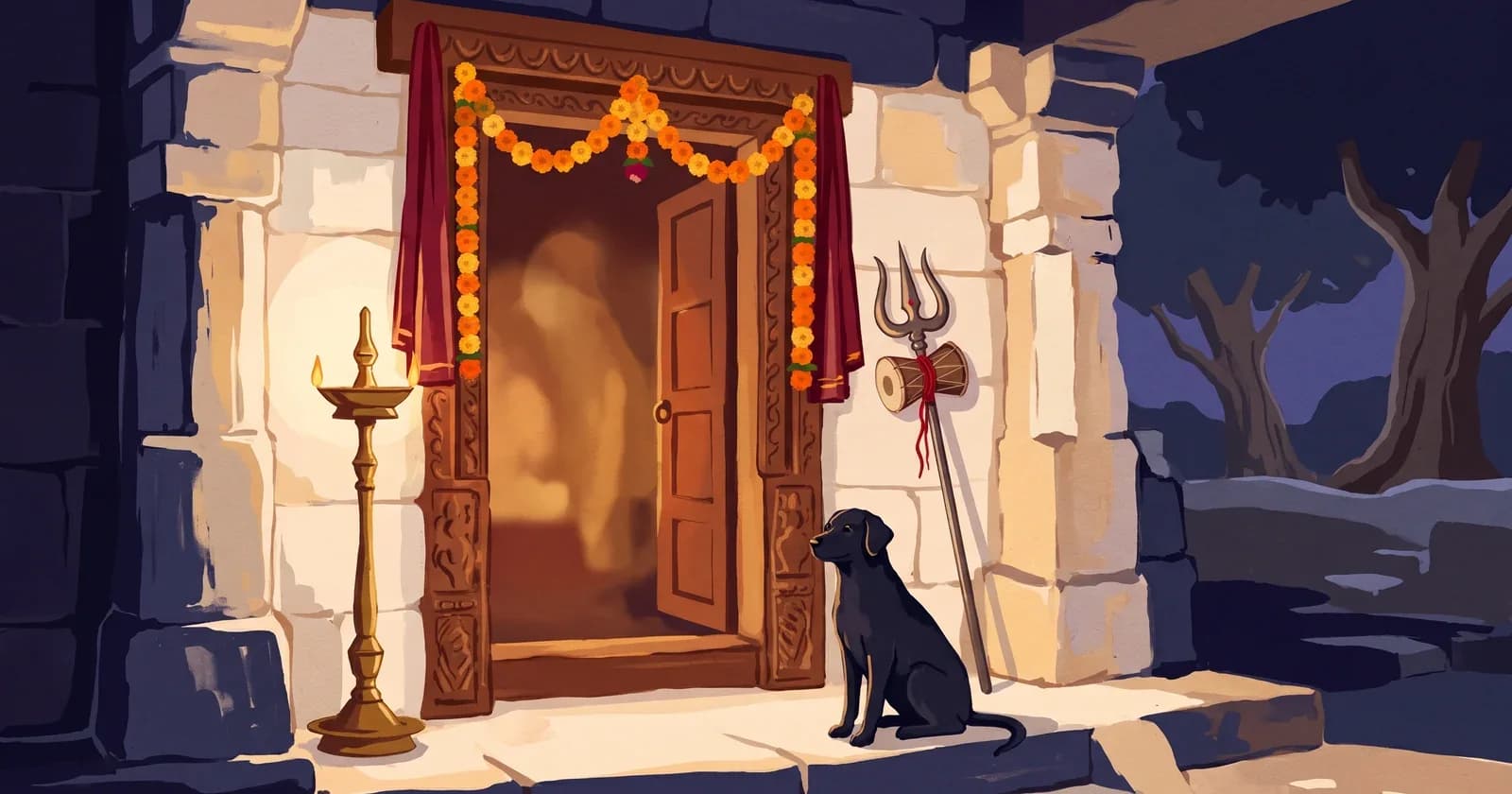
Kaal Bhairav Jayanti falls on Tuesday, 1 December 2026. The Ashtami tithi runs from about 12:11 AM to 11:13 PM IST that day, so the whole day and the evening worship fall within it.
The day marks the appearance of Kalabhairava, the fierce form of Shiva who is worshipped as the guardian of Kashi and as the lord of time. It falls on the eighth day of the waning moon, called Kalashtami, which is observed every month. This one, in Margashirsha, is the biggest of the year and is also called Bhairava Ashtami.
In the United States, Canada and the UK, many temples hold the main puja on the evening of Monday 30 November because of the time difference. If you're abroad, follow your local temple's announcement.
Kaal Bhairav Jayanti 2026 timings
Key timings for 1 December 2026 (IST)
| Time | Note | |
|---|---|---|
| Ashtami tithi begins | About 12:11 AM | Just after midnight |
| Ashtami tithi ends | About 11:13 PM | Late on the night of 1 Dec |
| Main worship | Evening and night | Bhairava is worshipped after dark |
The same day is also the monthly Krishna Janmashtami in some calendars. In the North Indian calendar it is "Margashirsha Krishna Ashtami", and in Maharashtra and the South it is "Kartika Krishna Ashtami". The date is the same in both. We explain why the month names differ in purnimanta vs amanta.
Who Kalabhairava is
Kala means time, and also black. Bhairava means the terrible or awe-inspiring one. Kalabhairava is Shiva in the form that devours time itself, before whom even death is afraid.
He is usually pictured dark-skinned, with a garland of skulls, a trident, a drum and a noose, and accompanied by a dog, his vahana. The form is frightening on purpose. In Shaiva thought, the terror is aimed at ego, pride and wrongdoing, not at the devotee. For those who turn to him, Bhairava is a protector, the one who stands guard while everyone else sleeps.
There are many Bhairavas in tradition, usually counted as eight principal forms (the Ashta Bhairavas), each guarding a direction. Kalabhairava is the most widely worshipped of them.
The story: Brahma's fifth head and the skull that would not fall
The story behind the festival is told, with variations, in several Puranas.
Brahma once had five heads. Puffed up with pride, he claimed to be the supreme creator and spoke dismissively of Shiva. From Shiva's anger, Kalabhairava appeared, and with the nail of his finger he cut off Brahma's fifth head.
Even rightful punishment of a Brahmin carried the stain of a terrible sin, brahmahatya. The skull stuck to Bhairava's palm and would not come away. Bhairava wandered the three worlds as a beggar, carrying the skull as his begging bowl, with the sin following him in the form of a woman.
Only when he entered Kashi did the skull fall from his hand. The spot is still remembered as Kapal Mochan, the release of the skull. Shiva then made Bhairava the guardian of Kashi, the Kotwal, the city's chief of police.
The story is read in two ways at once. It is a warning about pride, since even the creator was humbled. It is also about penance: even a god had to carry the weight of his act until it was resolved.
Where the day is celebrated
Varanasi. The Kaal Bhairav temple near Vishweshwarganj is one of the oldest shrines in the city. Pilgrims traditionally visit him before or after Kashi Vishwanath, to ask the Kotwal's permission to stay in the city. On Bhairava Ashtami the temple is crowded from early morning until late at night, and the deity is decorated and offered special worship.
Ujjain. The Kal Bhairav temple on the banks of the Shipra is famous for an unusual custom: liquor is offered to the deity as part of worship. Bhairava Ashtami brings a large festival to the temple.
Elsewhere. Bhairava temples across India, and especially in Tamil Nadu, Karnataka and Nepal, mark the day. In many South Indian Shiva temples a Bhairava shrine stands near the exit, and devotees visit it last.
How the day is observed at home
You don't need to visit a temple to observe Kalabhairav Ashtami. Common practices include:
A fast until the evening. Many devotees keep a fast through the day and eat after the evening puja. It is optional. Anyone who is pregnant, elderly, unwell or on regular medication should eat normally or take medical advice.
An evening lamp. Light a lamp with mustard or sesame oil after sunset. Offer black sesame, flowers, bilva leaves, a coconut and a simple sweet.
Recitation. The Kalabhairava Ashtakam, eight verses attributed to Adi Shankaracharya, is the most popular hymn for the day. The Bhairav Chalisa is common in Hindi-speaking homes. The short mantras "Om Kalabhairavaya Namah" and Om Namah Shivaya are both used.
A night vigil. Some families stay awake through the night with bhajans, since Bhairava is worshipped after dark.
Feeding dogs. Because the dog is Bhairava's vahana, feeding a stray dog or a neighbourhood dog is one of the most common customs of the day. It is also one of the kindest.
What Bhairava worship is believed to help with
Bhairava is traditionally prayed to for protection: from fear, from enemies and hostile situations, from obstacles while travelling, and during difficult periods in life. Some astrologers suggest Bhairava worship during hard Saturn or Rahu periods, since Bhairava is associated with time and with discipline.
That is tradition and personal faith. It isn't a guarantee of any outcome, and it isn't a replacement for practical help when you are dealing with a real problem. What the practice does reliably give is a regular evening of stillness and a reason to be generous, to a temple, to a hungry animal, or to someone who needs it.
If your concern is a particular planetary period, it helps to know which one you are actually in. Our dasha calculator shows the planetary periods running in your chart right now.
Questions people ask
When is Kaal Bhairav Jayanti in 2026?
Kaal Bhairav Jayanti is on Tuesday, 1 December 2026 in India. The Ashtami tithi runs from about 12:11 AM to 11:13 PM IST. In North America and the UK, many temples hold the main puja on the evening of Monday, 30 November.
Is Kaal Bhairav Jayanti the same as Kalashtami?
Kalashtami is the eighth tithi of every waning moon and is observed every month for Bhairava. Kaal Bhairav Jayanti is the Kalashtami of Margashirsha, believed to be the day Bhairava appeared, so it is the most important Kalashtami of the year.
Why is a dog associated with Kaal Bhairav?
The dog is Bhairava's vahana, the animal he rides or is accompanied by. It stands for loyalty and watchfulness, fitting for a guardian deity. That is why feeding dogs is a popular way to honour Bhairava on this day and on every Kalashtami.
What is offered to Kaal Bhairav?
Common offerings are a mustard or sesame oil lamp, black sesame, flowers, bilva leaves, coconut and sweets. At the Ujjain Kal Bhairav temple liquor is also offered by temple custom, but that is specific to the temple and not part of home worship.
Can I keep the Kalabhairav Ashtami fast if I am not a Shaiva?
Yes. Bhairava is worshipped across traditions, and many families who mainly worship Vishnu or the Goddess still mark this day. As with any fast, keep it in a way that suits your health, and treat a simple evening lamp and prayer as complete in themselves.